
Conceptual UX Optimization for Conversion and Clarity
Client • Etepetete GmbH
Year • 2025
Role • Creative Director, Director of Product
Scope • UI/UX, Conversion Optimization
Users were not choosing a product - they were evaluating a recurring commitment.
About
Conceptual conversion strategy addressing commitment hesitation in a subscription entry journey. Decisions derived from behavioral friction analysis and decision-confidence hypotheses.
Challenge
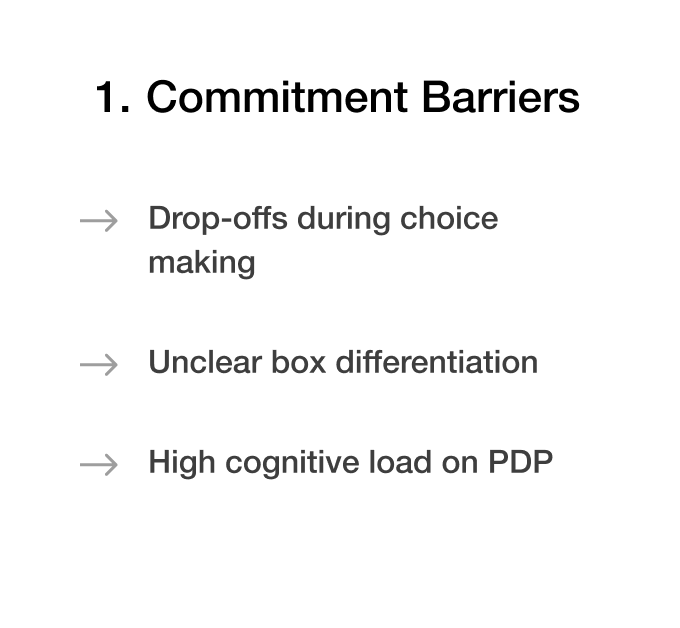
Subscription conversion was constrained by decision uncertainty during product discovery. Users struggled to differentiate box types and configuration options, causing hesitation at the commitment point. Drop off while discovering the PLP and PDP ranged between 60-80%.
Core challenge Simplify decision-making without reducing transparency or brand trust.
Role & Ownership
Led end-to-end strategy across UX, brand, and growth.
Directed an 8-person cross-functional team and aligned stakeholders around a commitment-first approach.
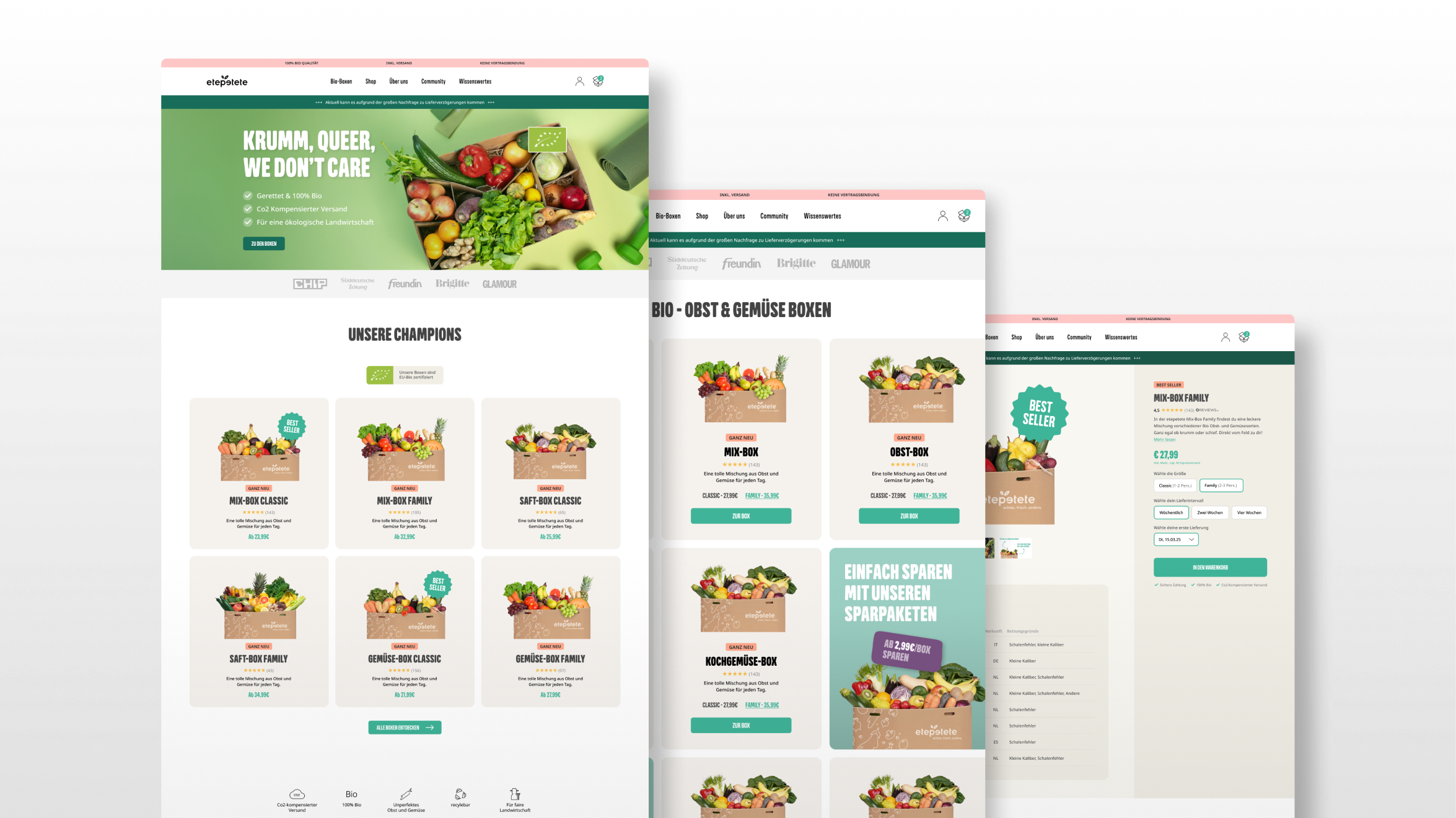
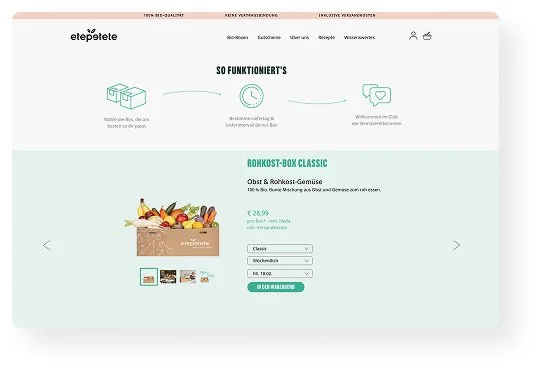
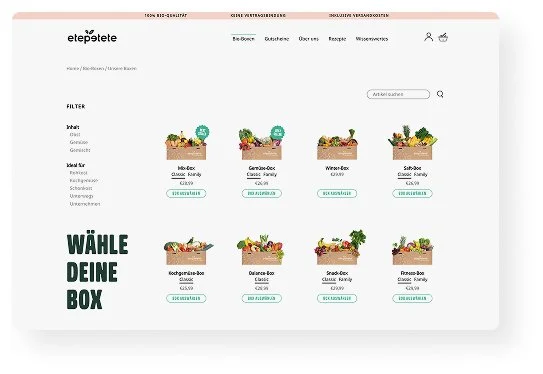
The current pages as the starting point of this project.
Decision Framework
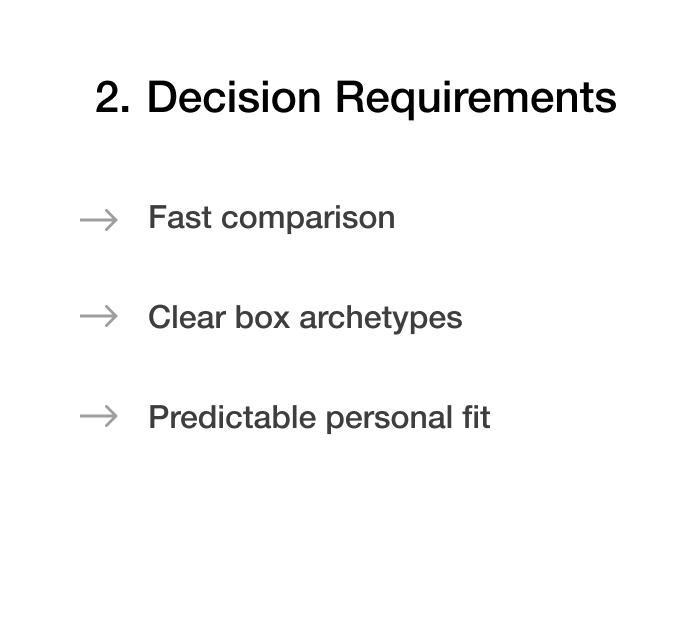
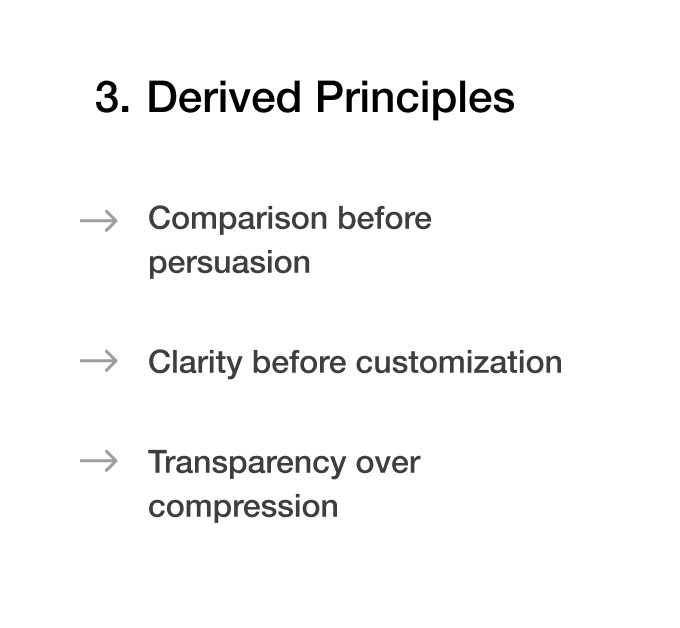
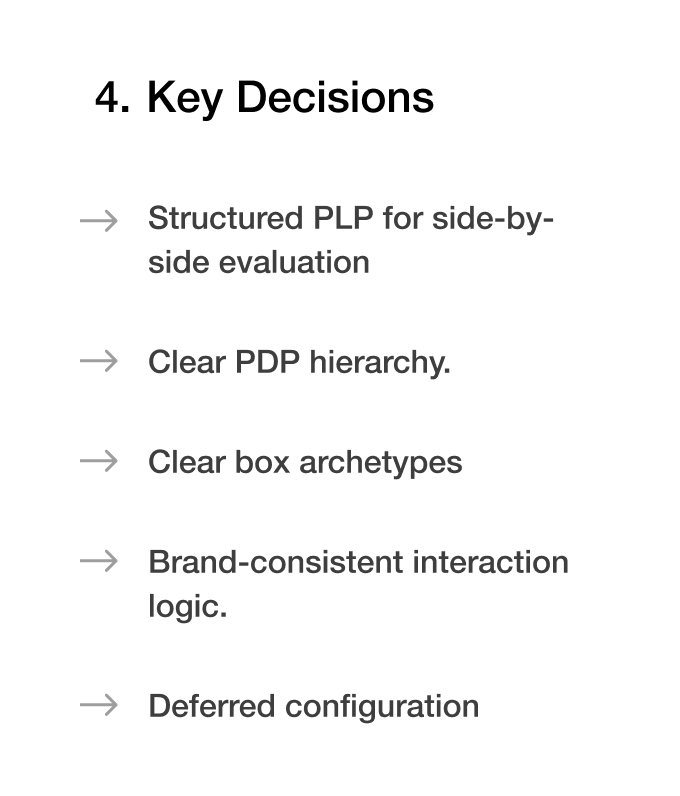
Expected Impact
Increase subscription conversion and reduce early churn risk by strengthening commitment confidence at entry.
Reduce decision friction to protect subscription intent.
Homepage
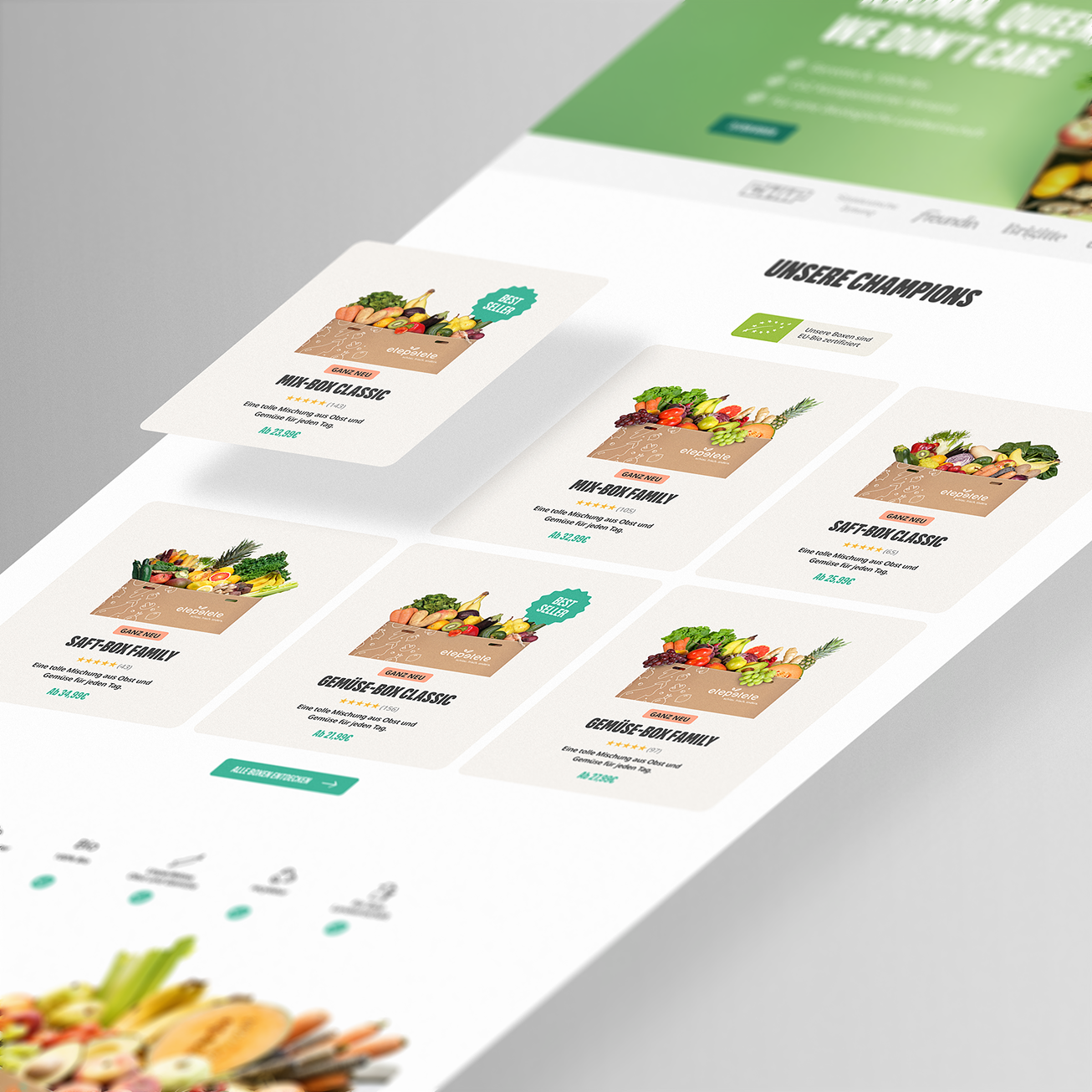
Top-performing products were elevated to the primary entry point and clearly differentiated to enable immediate comparison. A simplified hierarchy reduced decision effort, allowing users to grasp key differences at a glance and move faster toward commitment. Also certificates and testimonials are placed on top to gain trust.
Easy choice: Promote best performer only
Build trust fast: Certifications & testimonials
Clear hirachy of primary and secondary information
Expected Impact (Conservative)
8-10% increased Add-To-Card rate
4-6% increase in conversion
Product Listing Page (PLP)
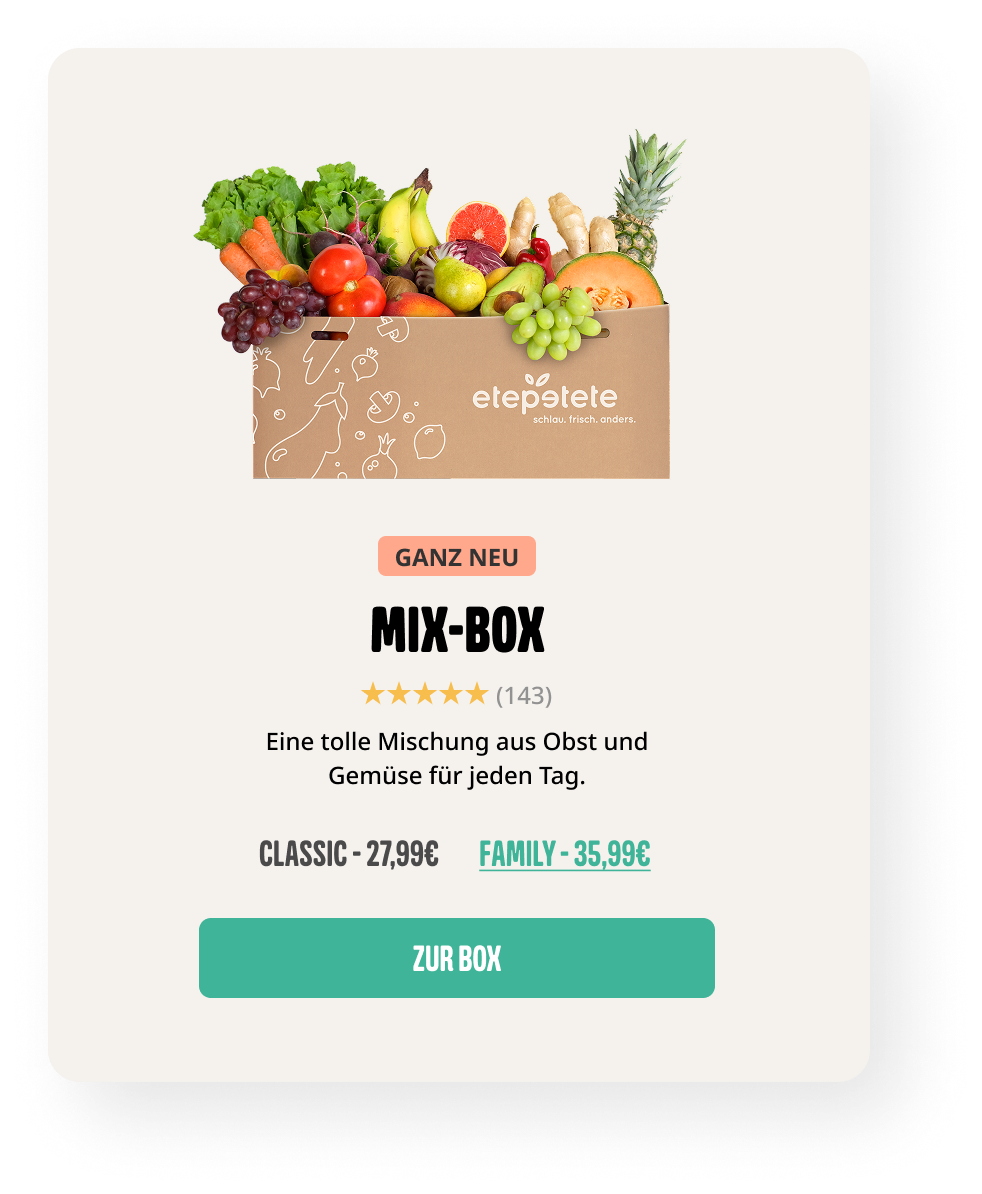
To enable faster decision-making, customers can preselect the appropriate product size before entering the box configurator. Available sizes and price differences are visible directly on the PLP, allowing users to toggle between options without visiting the product detail page. Customer reviews are also surfaced upfront to reinforce trust.
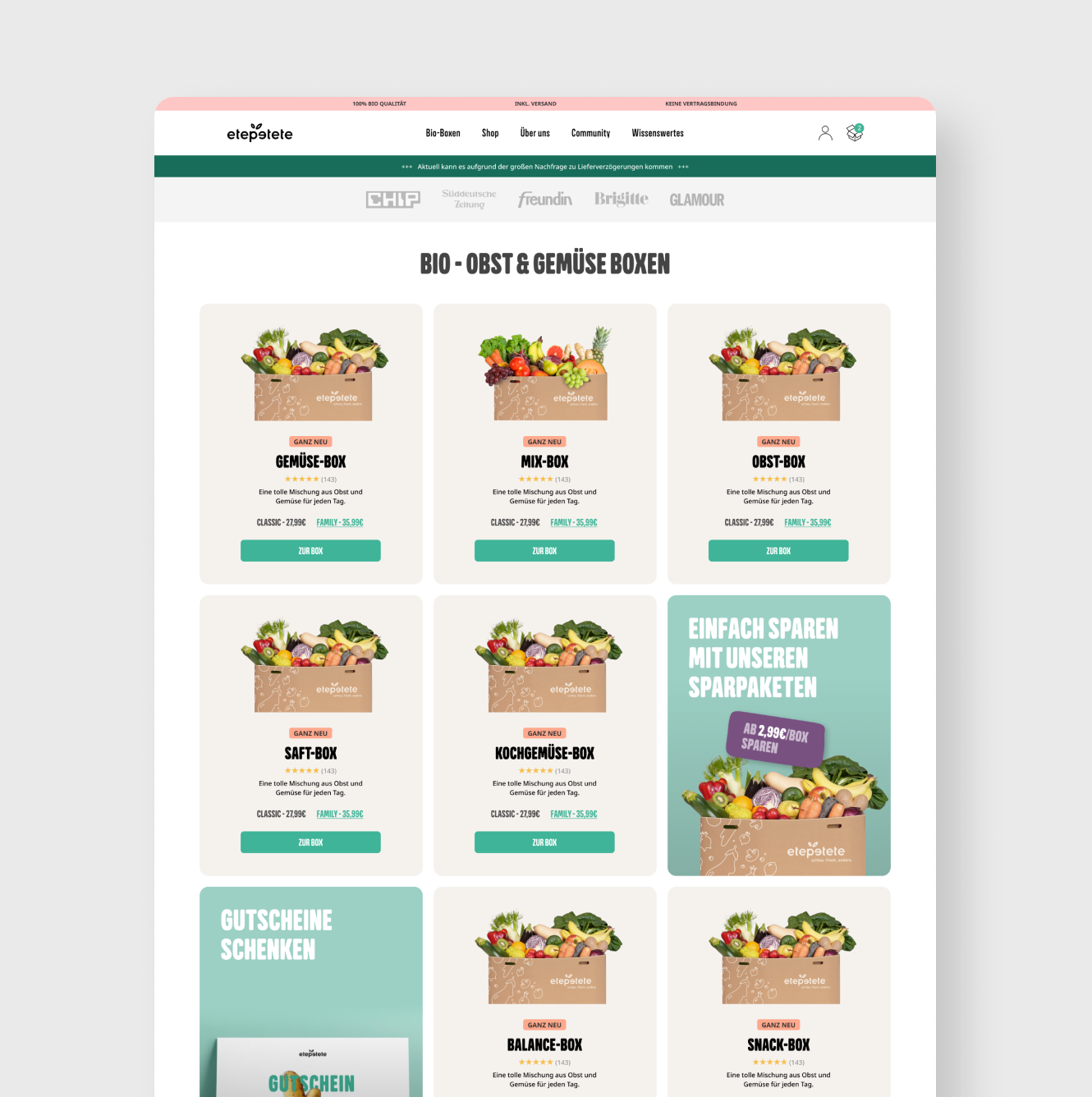
Standardized card structure to improve comparability.
Reduced information to decision-relevant essentials.
Strengthened visual hierarchy to guide attention and action.
Preselect product size before entering the configuration process.
Added customer reviews to gain trust
Expected Impact (Conservative)
10-14% increased Add-To-Card rate
6-8% increase in conversion
Product Detail Page (PDP)
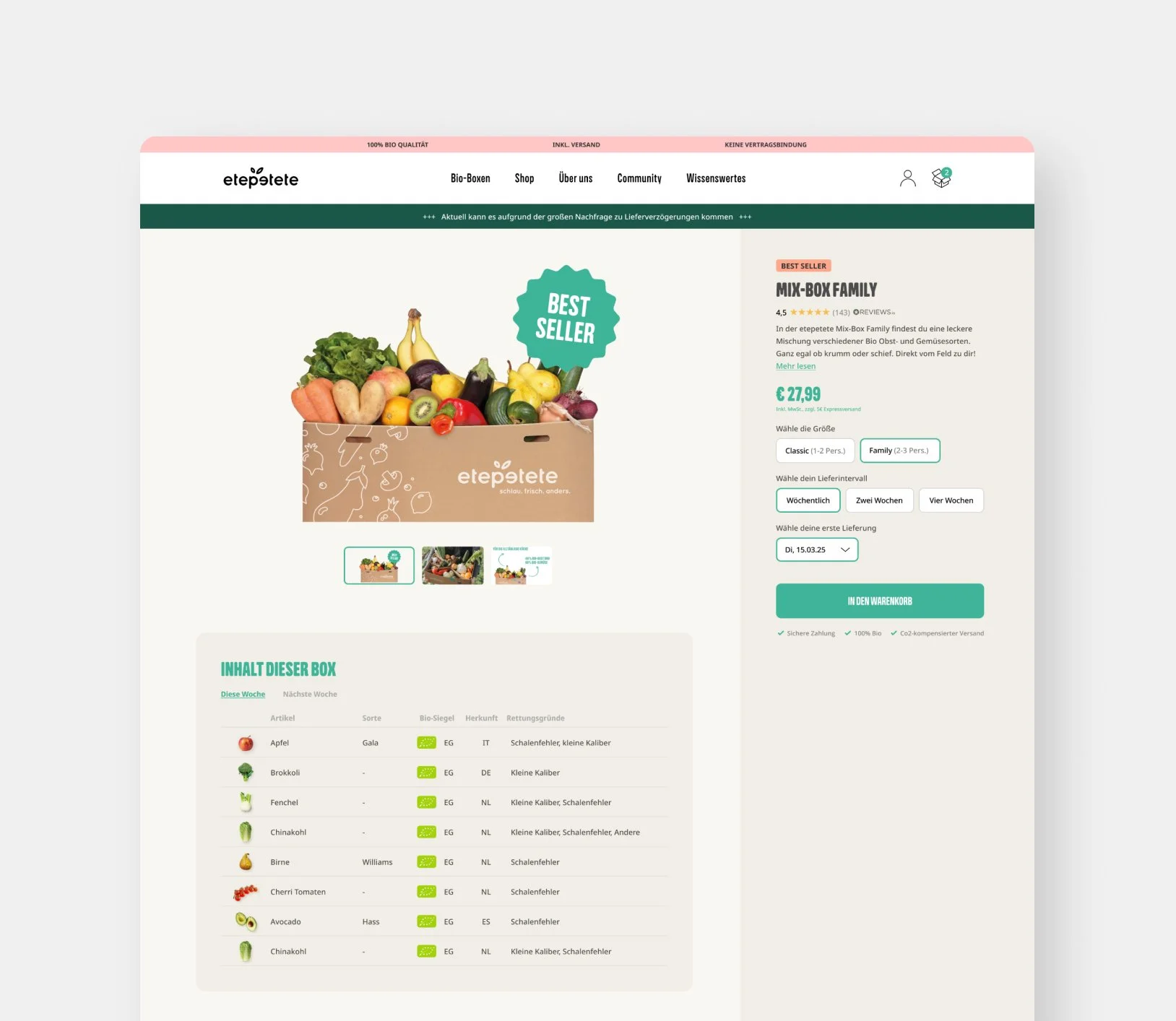
Separated decision-critical information from secondary details. Understanding what’s inside and how to configure must happen before emotional commitment breaks.
Easy-to-use preference configuation
Detailed box content
Clear hirachy of primary and secondary information
Expected Impact (Conservative)
10-15% increased Add-To-Card rate
8-10% increase in conversion
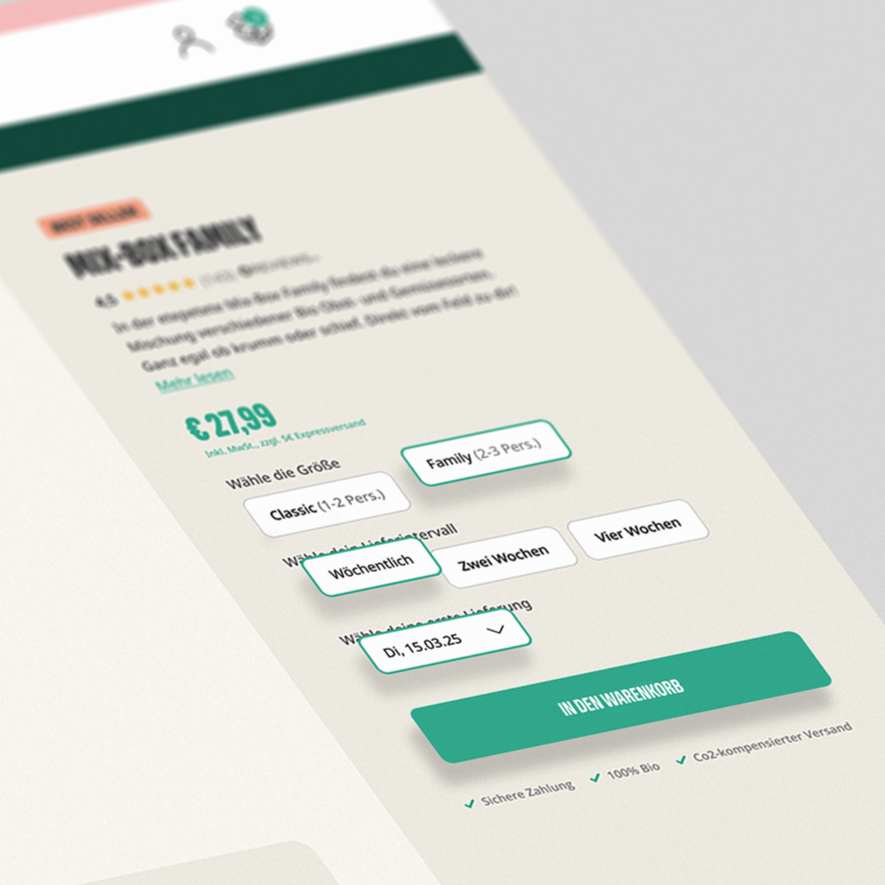
Make configuration settings directly visible and reduce dropdowns to reduce friction.
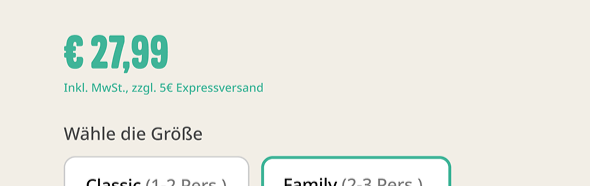
Hypothesis: Price Partitioning
Separating shipping costs from the product price promotes conversion, as the total cost of the product appears lower. As long as the additional shipping costs are communicated early on, there is a high probability that conversion will increase. Testing is crucial here.
Expected Impact (Conservative)
6-8% increased Add-To-Card rate
3-6% increase in conversion
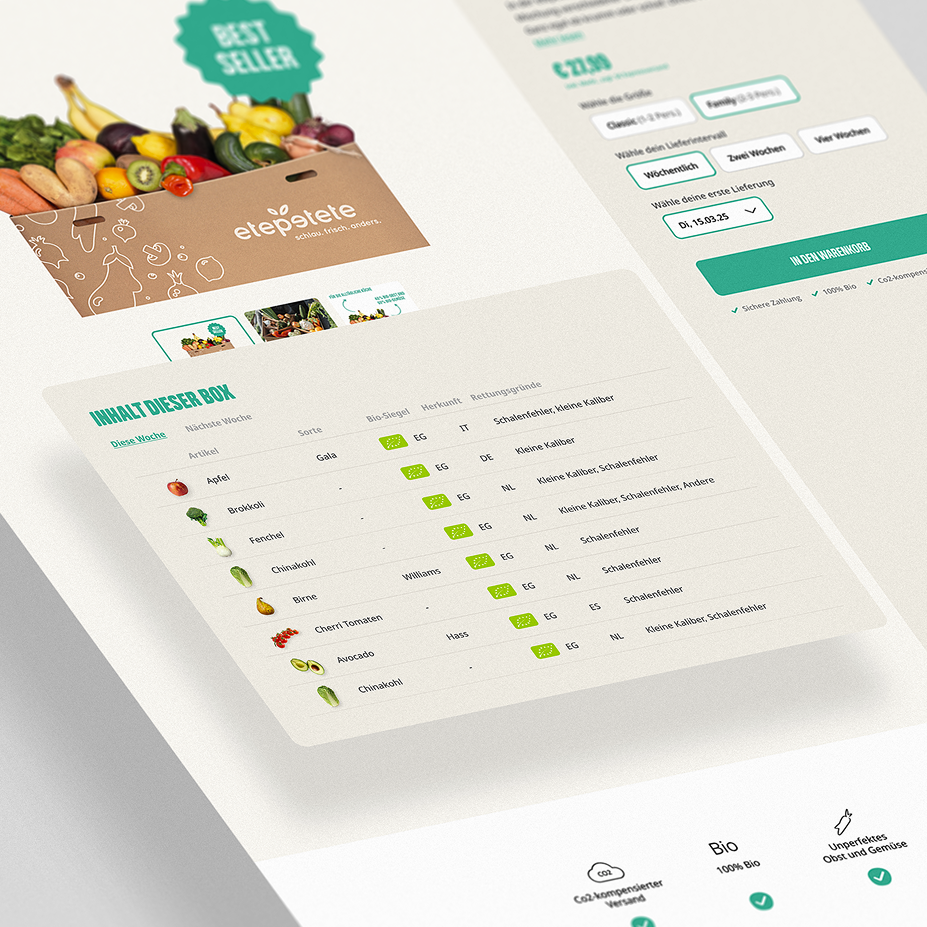
Made box contents transparent before purchase commitment.
Outcome, Learnings & Reflection
Expected Impact
While not implemented, the concept proposes:
Reduced cognitive load during product selection.
Clearer understanding of box contents before purchase commitment.
A more confident and guided decision flow.
Key learnings
Conversion issues are often structural, not visual
Transparency increases confidence more than persuasion
Strong UX decisions require prioritization, not completeness